
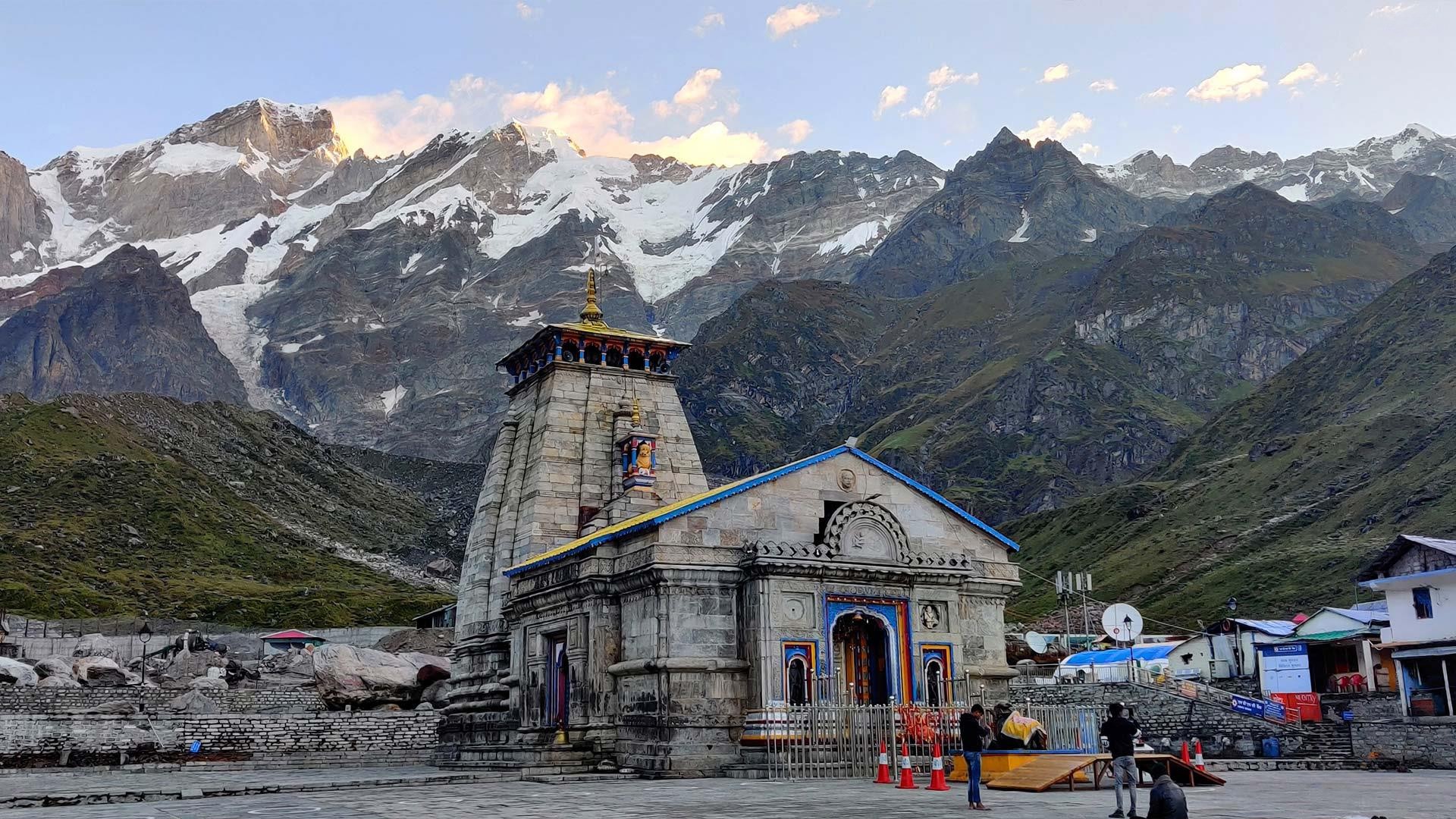
Kedarnath Temple, one of the twelve sacred Jyotirlingas of Lord Shiva, stands majestically at an altitude of 3,583 meters in the Himalayan range of Rudraprayag district, Uttarakhand. This holy shrine is celebrated not only for its profound spiritual significance but also for its breathtaking natural beauty and the challenging pilgrimage it offers. It is one of the most important destinations in the revered Chota Char Dham Yatra.
According to ancient mythology, after the Mahabharata war, the Pandavas came to this sacred land seeking atonement for their sins through the worship of Lord Shiva. Pleased with their devotion, Lord Shiva granted them His blessings and appeared here in the form of the Kedarnath Jyotirlinga. The current temple structure was rebuilt in the 8th century by the great philosopher Adi Shankaracharya. During the devastating floods of 2013, when everything around was swept away, the temple miraculously remained intact — an event that continues to reinforce the divine power of this sacred site.
Quick Information
- Main Deity: Lord Shiva (Kedareshwar)
- Location: Rudraprayag, Uttarakhand
- Altitude: 3,583 meters
- Nearest Town: Gaurikund (16 km trek)
- Temple Opens: April–May (Akshaya Tritiya)
- Temple Closes: Kartik Purnima (Oct–Nov)
Darshan & Aarti Timings
History & Mythology
The story of Kedarnath Temple traces back to the era of the Mahabharata. After the great war ended, the Pandavas were burdened by the sin of killing their own kin and sought Lord Shiva's blessings to free themselves from this karmic weight. They journeyed to the Himalayas in search of Him, but Lord Shiva, displeased with them, refused to grant His darshan.
When the Pandavas began their search, Lord Shiva took the form of a bull and hid among the cattle. Bhima recognized Him and tried to capture Him, but Shiva began to dissolve into the earth — His hump emerged at Kedarnath. This is why the shivlinga here is shaped like a hump, unlike any other Jyotirlinga in India.
The present temple structure was rebuilt in the 8th century by the great philosopher Adi Shankaracharya. His samadhi (final resting place) is also located right behind the temple. During the catastrophic floods of 2013, when everything around was washed away, the temple remained untouched — a massive boulder called the "Bhim Shila" came to rest behind the temple and shielded it from destruction. This miraculous incident further confirmed its divine power.
How to Reach
There are three main routes to reach Kedarnath. The final 16 km from Gaurikund must be covered on foot, by pony/mule, palanquin, or helicopter.
Accommodation
- GMVN Tourist Rest Houses — Government accommodations at Gaurikund and Kedarnath
- Dharamshalas & Budget Lodges — Available at Gaurikund, Sonprayag, and Rudraprayag
- Kedarnath Base Camp — Tents and cottages near the temple
- Advance Booking Essential — All accommodations fill up quickly during yatra season
Safety Advice
The Kedarnath Yatra is one of the most challenging Himalayan pilgrimages. Due to high altitude and cold weather, several precautions are essential —
- Weather can change rapidly — always check the daily weather bulletin
- Pilgrims with high blood pressure, heart, or respiratory issues must consult a doctor first
- Avoid travel during monsoon (July-August) — risk of landslides and floods
- Yatra registration with the Uttarakhand government is mandatory
- Carry warm woolen clothes, raincoat, and a basic medical kit
- Use ponies or palanquins for elderly travelers and children
Temple Location
The exact location of Kedarnath Jyotirlinga Temple — zoom in on the interactive map below or open it in Google Maps for navigation.
Frequently Asked Questions
The temple gates traditionally open in April/May on Akshaya Tritiya and close on Kartik Purnima (October/November). During winter, daily worship continues at the Omkareshwar Temple in Ukhimath.
Yes, helicopter services are available, but they depend on weather conditions and seat availability. This is the most convenient option for senior citizens and differently-abled pilgrims. A valid ID, advance booking, and basic health information are required.
During winter months, the worship of Lord Kedarnath is conducted at the Omkareshwar Temple in Ukhimath. Devotees can visit there for regular darshan and prayers during this period.
The trek is approximately 16 km long and is considered moderate to challenging due to the high altitude and cold weather. Travel only with proper fitness and preparation. For elderly travelers and children, ponies or palanquins are recommended alternatives.
During July-August, there is a high risk of heavy rainfall and landslides, making the journey risky. The safest and most enjoyable time to travel is during May-June and September-October.
Most networks work well up to Gaurikund. However, coverage on the trek route and around the temple area is limited and depends on the weather. BSNL and Jio networks generally have better coverage in these regions.
Yes, there are several dhabas (small eateries) and tea stalls along the trek route where you can find light meals, water, and tea. However, it is still advisable to carry your own drinking water and some snacks.
Photography and videography are strictly prohibited inside the temple's sanctum (garbhagriha). However, you may take photos in the outer courtyard with permission from the temple authorities.
Yes, there are primary health centers at Gaurikund and Sonprayag. Emergency medical assistance is also available along the trek route, including oxygen cylinders and stretcher services for those in need.
Yes, the Uttarakhand government has made yatra registration mandatory. You can register online through the official portal or at local registration centers. This helps ensure tracking and assistance in case of any emergency.
Official Website
For yatra booking, darshan registration, and official information, please visit the temple committee's website.
badrinath-kedarnath.gov.in