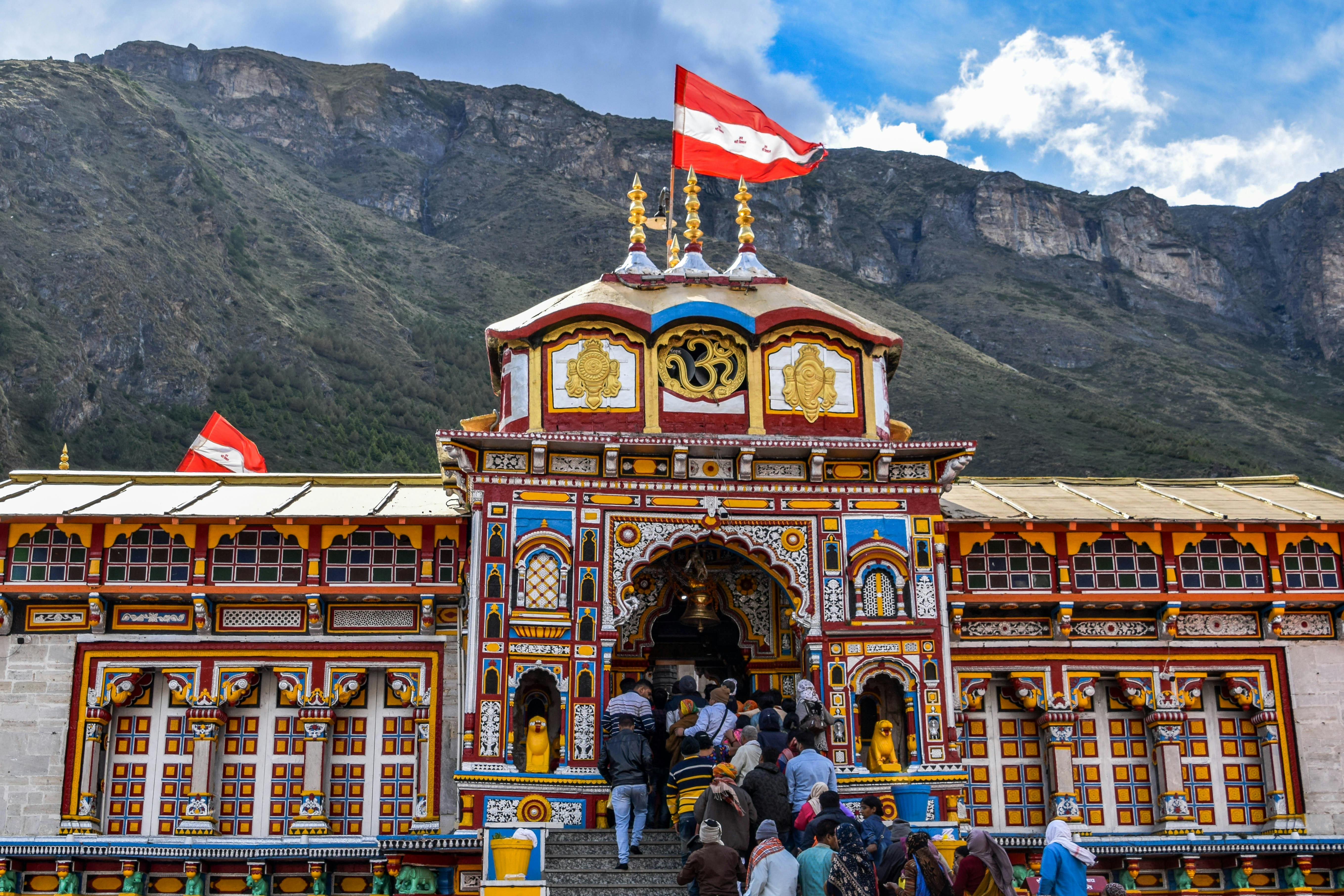
Badrinath Temple, dedicated to Lord Vishnu, is the most important shrine of the sacred Char Dham and Chota Char Dham Yatra. Located in the Chamoli district of Uttarakhand at an elevation of 3,133 meters on the holy banks of the Alaknanda river, this temple is celebrated as "the Primary Dham of Char Dham, the Divine Abode of Lord Vishnu" and is regarded as one of the holiest pilgrimage sites in Hinduism.
According to ancient mythology, the great sages Nar and Narayan performed intense tapasya at this sacred land, and Lord Vishnu Himself meditated on the banks of the Alaknanda to liberate all worlds. The deity enshrined in the sanctum is a self-manifested (Swayambhu) Shaligram idol of Lord Vishnu — making this temple uniquely sacred. In the 8th century, Adi Shankaracharya restored this temple and established it as an essential part of the Char Dham Yatra.
Quick Information
- Main Deity: Lord Vishnu (Badri Vishal)
- Location: Chamoli, Uttarakhand
- Altitude: 3,133 meters
- Nearest Town: Joshimath (45 km)
- Temple Opens: April-May (Akshaya Tritiya)
- Temple Closes: Kartik Purnima (Oct-Nov)
Darshan & Aarti Timings
Aarti Timings (Detailed)
Throughout the day, three major aartis are performed at the Badrinath Temple — each one carries its own divine significance. Devotees who arrive at these specific times can experience the soul-stirring darshan of Lord Badri Vishal and immerse themselves in heartfelt devotion.
History & Mythology
The glory of Badrinath is ancient and deeply divine. According to the Puranas, the great sages Nar and Narayan performed thousands of years of intense tapasya on this sacred land. During the tapasya, Goddess Lakshmi took the form of a Badri (berry) tree to protect Lord Vishnu from the harsh weather — which is how this divine place came to be known as "Badrinath."
The present temple structure was reconstructed by Adi Shankaracharya in the 8th century. He recovered the sacred Shaligram idol from the Alaknanda river and installed it in the temple — where it continues to be worshipped to this day. Over the centuries, the temple has been beautified and restored by various Garhwali kings, Sikh Gurus, and devout patrons.
The Swayambhu Shaligram idol enshrined in the temple is considered a direct manifestation of Lord Vishnu Himself. This unique feature sets Badrinath apart from all other Vishnu temples. It is believed that even a single darshan of this Dham frees a devotee from the cycle of 84 lakh yonis (births and rebirths).
How to Reach
There are three main ways to reach Badrinath Dham. Road travel is the most popular option, as direct vehicular access is available right up to the temple.
Accommodation
- GMVN Tourist Rest House — Comfortable government-run accommodation in Badrinath
- Badrinath Dharamshalas — Budget-friendly stays run by religious organizations
- Mid-range & Premium Hotels — Several comfortable options near the temple
- Advance Booking Essential — Everything fills up quickly during peak season (May-June, Sep-Oct)
Safety Advice
The Badrinath Yatra takes you deep into the high Himalayas. Due to high altitude, cold weather, and narrow mountain roads, certain precautions are essential —
- Weather can change suddenly — always carry warm clothes, an umbrella, and a torch
- High altitude sickness is possible — consult a doctor if needed
- Avoid travel during snowfall and landslide-prone months (November-April)
- Heart patients and those with respiratory issues must take extra precautions
- Char Dham Yatra registration with the Uttarakhand government is mandatory
- During peak season, take special care of elderly travelers and children
Temple Location
The exact location of Shri Badarinath Dham — zoom in on the interactive map below or open it in Google Maps for navigation.
Frequently Asked Questions
The temple gates traditionally open in May on Akshaya Tritiya and close around Kartik Purnima (October-November). During the winter months, the worship of Lord Badri continues at the Narsingh Temple in Joshimath.
During the winter, when the Badrinath gates remain closed, the worship of Lord Badri is conducted at the Narsingh Temple in Joshimath. Devotees can visit this temple throughout the year for daily darshan.
The temple is located at an altitude of approximately 3,133 meters above sea level. The weather is pleasant during May-June and September-October. July-August brings heavy rainfall and risk of landslides, while November to April sees heavy snowfall and bitter cold, during which the temple remains closed.
Yes, Badrinath is connected by road, although the route is narrow and mountainous. Good bus and taxi services are available up to Joshimath. The final 45 km stretch from Joshimath to Badrinath is covered by taxi or jeep. Stay alert for landslides and traffic delays during your journey.
The Badrinath Yatra can be challenging for the elderly and small children due to the altitude and cold weather. Carrying sufficient warm clothes, gradual altitude acclimatization, and proper medications can make the journey much easier. Those with heart or respiratory conditions must consult a doctor before traveling.
Badrinath offers dharamshalas, guest houses, and GMVN rest houses. It is advisable to book accommodation in advance during peak season. Most eateries are vegetarian and serve North Indian thalis, khichdi, parathas, tea, and other simple meals.
Yes, Badrinath is the primary Dham of the Char Dham Yatra (Yamunotri, Gangotri, Kedarnath, and Badrinath) as well as the Chota Char Dham. For Hindu devotees, having darshan of Badrinath at least once in a lifetime is considered deeply auspicious and a path to moksha (liberation).
The most prominent celebrations here are the Badri-Kedar Utsav (June) and the Mata Murti Ka Mela (September). Grand religious ceremonies are also held during the temple's opening and closing days, attracting thousands of devotees from across India and abroad.
Mobile phones and cameras are strictly prohibited inside the temple's sanctum (garbhagriha). Photography and videography in the temple complex require permission from the temple management. Devotees are requested to maintain restraint and respect the sanctity of the holy site.
Always carry warm clothes, an umbrella/raincoat, comfortable shoes, basic medications, and a torch. Due to the altitude, breathing difficulties may occur — so walk slowly and stay well-hydrated. Crowds are heavy during peak season, so advance booking for accommodation and transport is essential.
Official Website
For yatra booking, darshan registration, and official information, please visit the temple committee's website.
badrinath-kedarnath.gov.in